


LocalMate: Local Dating & Chat
4.61.60K Reviews
App Specs
- Version
- 1.1.8
- Updated On
- License
- Free
- Downloads
- 100,000+
- Developer
- LogicGrid Ventures LLC
- Categories
- Social
- Platform
- Android
Screenshots




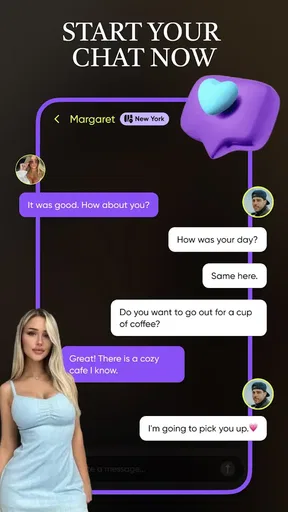



 Analysis by AppCompare
I approached LocalMate as a social app for people who want conversations that feel closer to home rather than an endless stream of distant profiles. Its promise is simple: help you chat and connect with people who share your interests. After spending time with it, my impression is that its strongest quality is not novelty alone, but the possibility of turning a quick browse into a repeatable local routine. Whether it deserves a permanent place on your phone depends on how much effort you are willing to put into starting conversations and keeping them moving.
The app is free to install, which makes trying it fairly easy, although purchases inside the app range from $4.99 to $99.99 per item. It is aimed at adults, with a Mature 17+ content rating, so I would not treat it as a general-purpose social space for younger users. LogicGrid Ventures LLC develops it, and the current version is 1.1.8. It runs on Android 6.0 or later, making it accessible on many older Android phones as well as newer devices.
What LocalMate feels like during the first week
The first-week appeal comes from reducing the distance between discovering someone and imagining an actual conversation. In many social apps, the audience can feel so broad that every interaction becomes abstract. A local focus changes the question in your head from “Will I ever meet this person?” to “Could this conversation fit naturally into my life?” That shift is valuable, especially for someone who has recently moved, works remotely, or wants to expand a social circle without relying entirely on existing friends.
I found the most useful way to approach LocalMate was to treat the opening days as a period of observation rather than a race to contact everyone. Look for people whose interests give you a natural starting point, then write something more specific than a greeting. A short comment about a shared hobby or a nearby activity gives the other person something to answer. This matters because local social apps can become tiring quickly when every exchange begins with the same empty question.
The app’s social category is clear in practice: it is built around meeting and chatting with like-minded people, not around replacing a private messenger, a neighborhood noticeboard, or a full event-planning service. That distinction helps set expectations. I would use it to discover possible connections and begin conversations, then move more deliberately once trust and mutual interest develop.
One realistic use case is a person who has moved to a new area and spends most evenings at home. Instead of searching broadly across several unrelated platforms, that person can open LocalMate, browse for people with compatible interests, and start with a low-pressure conversation. If the exchange becomes comfortable, the next step might be discussing a public place or a shared activity. The app is most useful in that early bridge between being a stranger and having a reason to say hello.
Its early appeal is also helped by its scale. LocalMate has passed 100K installs and holds a 4.6 average from around 20K ratings, with roughly 1.6K written reviews. Those figures suggest that the app has attracted a meaningful audience rather than remaining an empty experiment. They do not guarantee that every area will feel equally active, though. A local service can be lively for one person and quiet for another depending on location, interests, and the times they check it.
Worth Reading Before You Choose

EA SPORTS FC Mobile 26 Is a Bigger Football Game, but It Takes Time

Flipboard Shows What News Apps Must Do Beyond the Feed

Switching to Android Auto Means Rethinking Your Driving Routine

Google Calendar Makes a Crowded Week Easier to Manage

Ludo King Makes the Most of the Minutes Between Plans

Baby Panda World Brings Quick Play to Modern Phones, but Its Game Library Feels Busy
How to get better conversations instead of more noise
My first practical tip is to decide what kind of connection you want before opening the app. “Meeting people” is too broad to guide good choices. You might be looking for casual conversation, a shared interest, dating potential, or simply a familiar face nearby. Being clear with yourself makes it easier to recognize suitable profiles and avoid spending energy on conversations that were never aligned.
A second useful habit is to judge consistency, not just immediate charm. A lively first exchange can be exciting, but lasting value comes from people who respond respectfully and show some interest in you as well. I would rather have a small number of genuine conversations than fill my chat history with contacts who disappear after a few messages. This is one of the less obvious trade-offs of a local social app: a smaller pool can feel more relevant, but every inactive or mismatched connection is more noticeable.
I also recommend keeping personal details gradual. Local context can make a conversation feel familiar quickly, but familiarity is not the same as trust. I would avoid rushing into precise routines, home information, or private contact details. If a conversation progresses toward meeting, a public setting and a clear plan are sensible choices. LocalMate may help create the introduction, but the user still has to manage boundaries and judgment.
The Mature 17+ rating is important here. I would not install it for a child or assume that a friendly tone makes the entire environment suitable for teenagers. Adults should also remember that a social app can contain conversations and behavior that vary widely from one person to another. The rating is a useful signal to take the audience seriously, especially if the phone is shared with younger family members.
Whether the app still matters after the novelty fades
The harder test begins after the first week. Most social apps can feel promising when every profile is new and every message carries possibility. The question is whether LocalMate gives me a reason to return when I have already seen the obvious matches. In my view, its recurring value depends less on constant browsing and more on whether it helps create a manageable habit of conversation.
I would not use it as a background feed that I check whenever I am bored. That approach encourages shallow browsing and makes the service feel repetitive. A better routine is to open it with a small purpose: reply to an ongoing chat, look for one new conversation, or check whether a promising connection has developed. This keeps the app from taking over the evening while still giving it a chance to produce real social value.
The strongest long-term scenario is someone whose local social needs change gradually. A newcomer may first use the app to learn who shares their interests, then return to maintain a few conversations. Someone who already has friends might use it less often, but still find value when looking for people around a particular hobby. In both cases, the app earns its place only if conversations lead somewhere beyond repeated introductions.
Compared with a general social network, LocalMate feels more focused on personal connection and local discovery. A general network is usually better for following known friends, public personalities, groups, or established communities. Compared with a traditional dating service, LocalMate may feel less rigid if your goal is broader social contact, but a dedicated dating app may offer clearer tools for users who want a strictly romantic search. Compared with a neighborhood forum, LocalMate is more personal and one-to-one, while a forum is often better for announcements, recommendations, and practical local questions.
That comparison reveals the app’s central trade-off. Its local, conversational angle can make introductions feel more relevant than a giant global network, but it does not automatically provide the structure of a dating platform or the public usefulness of a neighborhood board. I would choose it when I want to meet people as individuals. I would choose something else when I need organized events, formal community information, or a clearly defined romantic matching system.
Small routines that improve month-to-month value
One workflow I found sensible is to separate discovery from commitment. During a short session, I would identify a few potentially compatible people, start only the conversations that feel natural, and then close the app. Later, I would return to the replies rather than continuing to collect new profiles. This reduces the common social-app problem of accumulating possibilities without investing in any of them.
Another tip is to use conversation quality as a filter. If someone repeatedly gives one-word replies, ignores reasonable boundaries, or turns every exchange toward pressure, there is little reason to keep trying simply because the person is nearby. Local relevance is helpful, but it should never outweigh respect. A nearby connection that drains you is not more valuable than a distant one that is thoughtful, even if the app’s purpose encourages local contact.
I would also refresh my own approach when conversations become stale. That does not mean constantly rewriting a profile or performing a different personality. It means being more precise about interests and asking questions that invite a real answer. If I describe a hobby in a vague way, I make it harder for someone to find an opening. If I mention the specific part I enjoy, the other person has more to work with.
These habits make the app less dependent on novelty. The recurring value comes from a small circle of promising conversations, not from the number of times I scroll. For users who enjoy slow, organic connection, that can be enough to justify keeping it installed. For users who expect a steady stream of dramatic new matches, the experience may feel less rewarding once the initial excitement settles.
Maintenance, friction, and the reasons people may stop returning
Every social app creates maintenance work, even when it looks simple. LocalMate asks for attention through conversations, decisions, and personal boundaries. I have to decide who deserves a reply, when an exchange has run its course, and how much information I want to share. None of that is a defect unique to this app, but it is part of the real cost of using it.
The biggest burden is emotional rather than technical. A message can be ignored, misunderstood, or answered warmly one day and not at all the next. If I treat every conversation as a promise, the app becomes exhausting. I get better results when I see early chats as possibilities rather than commitments. That mindset makes it easier to leave unproductive exchanges without feeling that I have failed.
Local concentration can create another source of fatigue. If the pool around me is limited, I may encounter similar profiles repeatedly or reach the end of the most obvious options quickly. Someone in a densely populated area may experience more variety than someone in a small community. Because of that, I would not judge the app after one quiet session, but I also would not keep checking compulsively if the local audience clearly does not match my interests.
There is also a financial point to consider. The app is free, but optional purchases can cost between $4.99 and $99.99 for an item. I would begin with the free experience and only consider spending after understanding whether the app actually produces conversations I value. A purchase cannot manufacture compatibility, mutual interest, or good behavior. If the basic experience does not fit my routine, paying more is unlikely to solve the underlying problem.
The mature audience can be another reason to skip it. I would avoid LocalMate if I wanted a tightly moderated, family-oriented environment or if I felt uncomfortable managing conversations with strangers. I would also look elsewhere if my main goal were professional networking, public local news, or structured group activities. The app’s strength is personal discovery, and that focus becomes a weakness when the user needs a different kind of social tool.
Safety and boundaries that matter in everyday use
I think the safest way to use a local chat app is to keep the first stage inside the app and let trust develop through repeated, respectful interaction. I would not share an exact home address, daily schedule, financial information, or identifying documents. If someone becomes impatient about those boundaries, that is useful information in itself.
For a first meeting, I would choose a busy public place, tell someone I trust where I am going, and arrange my own way home. I would also keep the first meeting short enough that leaving feels easy. These steps are not about assuming every contact is dangerous; they are about preserving control while an online connection becomes an offline one.
Another practical rule is to avoid confusing local familiarity with verification. Someone may mention a nearby place or shared interest and still be a stranger. I would pay attention to consistency across conversations and stop engaging if the interaction becomes manipulative, threatening, or sexually aggressive. The Mature 17+ rating makes adult judgment especially important here.
Privacy also affects long-term comfort. A social app can become more enjoyable when I share enough personality to invite conversation, but oversharing can make later interactions feel intrusive. I prefer a profile and chat style that reveal interests without exposing every part of my routine. That balance gives people a way to connect while leaving room for trust to grow naturally.
My long-term verdict on keeping LocalMate installed
After the first-week excitement fades, I think LocalMate earns lasting space for a specific kind of user: an adult who wants local, interest-based conversations and is willing to nurture a few connections rather than endlessly browse. Its free entry point makes experimentation straightforward, and the existing audience gives it a better chance of producing useful encounters than an empty new social app. The 4.6 average from around 20K ratings is encouraging, but my recommendation still depends on whether people near you are active and compatible.
I would recommend it to someone who has recently moved, works from home, wants to widen a social circle, or prefers direct conversation over public posting. I would especially recommend using it with a defined routine: short sessions, thoughtful opening messages, gradual disclosure, and a willingness to stop when a connection is not reciprocal. That approach gives the app a realistic chance to become part of normal life instead of another source of notifications.
I would skip it if you want a complete dating system, a family-friendly network, a professional community, or guaranteed local events. I would also skip it if you dislike initiating conversations or find the uncertainty of chatting with strangers stressful. In those cases, a dedicated alternative with a clearer purpose may suit you better, even if it has a wider or less personal audience.
For me, the lasting question is not whether LocalMate can create an exciting first impression. It can. The real question is whether I can maintain a healthy rhythm without turning social discovery into a chore. When I use it selectively, protect my boundaries, and focus on a few worthwhile conversations, it feels useful. When I browse without a goal or expect the app to do all the social work, the experience quickly loses its energy.
My final view is positive but measured. LocalMate is not a replacement for real community, established friendships, or every other social tool. It is a focused starting point for meeting people nearby and discovering shared interests. Its best long-term feature is the habit it can support: small, intentional conversations that may gradually become part of everyday life. If that is the kind of connection you are looking for, I think it is worth trying, while keeping your expectations—and your personal boundaries—firmly in your hands.
Pros
- Location-based matching helps discover people nearby.
- Chat features make it easy to start conversations after matching.
- Useful for finding local connections while traveling or relocating.
- Profile browsing is simple and quick to navigate.
- Can help users meet people with similar dating intentions.
Cons
- Some features may require a premium subscription or in-app purchases.
- Match quality can vary depending on the number of nearby users.
- Sharing your location may raise privacy concerns for some users.
- Inactive or incomplete profiles can make browsing less reliable.
- As with any dating app
- users should stay alert for fake profiles and scams.
FAQs for LocalMate: Local Dating & Chat
What is LocalMate: Local Dating & Chat used for?
LocalMate: Local Dating & Chat is designed to help people discover and communicate with potential matches nearby. After creating a profile, users can generally browse local members, view shared interests and photos, and start conversations through the chat feature. It may be useful for dating, making new connections, or meeting people in the same area, although the quality of matches depends heavily on your location and the number of active users nearby.
Is LocalMate: Local Dating & Chat free to download and use?
The app may be available to download at no initial cost, but some functions can require in-app purchases, a subscription, or virtual credits. Features such as unlimited messaging, advanced search filters, profile visibility boosts, or seeing certain interaction details may be restricted depending on the current version and your region. Before subscribing, carefully review the pricing, renewal terms, and cancellation options shown in the app store.
Does LocalMate protect my privacy and personal information?
As with any dating or chat platform, LocalMate may collect information needed to create an account, display a profile, provide matching features, and support communication. Before registering, read the app’s privacy policy to understand how profile details, photographs, location data, and messages are handled. Avoid publishing your home address, workplace, financial information, or other sensitive details, and adjust visibility and location permissions whenever possible.
How can I stay safe while using LocalMate?
Use sensible online-dating precautions when interacting with LocalMate members. Keep early conversations inside the app, verify that a person’s identity and behavior are consistent, and be cautious of profiles that quickly request money, gift cards, personal documents, or urgent favors. If you meet someone, choose a busy public location, tell a trusted person about your plans, and use the app’s block and report tools for suspicious or abusive behavior.
What should I know about the quality of matches and conversations?
Your experience with LocalMate can vary considerably depending on your city, age range, preferences, and the number of active members in your area. Some users may find relevant local profiles quickly, while others may encounter inactive accounts, limited matches, or conversations that do not develop. Complete your profile honestly, use recent photos, set realistic preferences, and remember that matching features cannot guarantee compatibility or genuine intentions.


